

Battery vs. Gas Lawn Mowers: Which Is Better for Calgary Homeowners?
Hey neighbour!
One of the most common questions we hear from homeowners is whether it is finally time to switch from a gas lawn mower to battery power.
For many yards, the answer is yes.
Modern battery mowers are quieter, easier to start, and much more capable than the early cordless mowers many people remember. Today’s better models can provide strong cut quality, self-propelled drive, steel decks, mulching, bagging, and enough runtime for a typical Calgary lawn.
That does not mean gas mowers have become obsolete.
A good gas mower still offers dependable power, fast refueling, and the ability to keep working for as long as fuel is available. For larger lawns, thick grass, irregular mowing, or properties where charging is inconvenient, gas may remain the more practical choice.
At Arns Equipment, we sell and service both battery and gas lawn mowers. We are not interested in telling every customer that one technology is automatically better. The right mower depends on your lawn, how you mow, where you store your equipment, and how much maintenance you are comfortable doing.
This guide explains the real differences between battery and gas lawn mowers so you can choose the one that fits your property.

Battery vs. Gas Lawn Mowers at a Glance
| Consideration | Battery mower | Gas mower |
|---|---|---|
| Starting | Push a button or hold a switch | Pull start or electric start, depending on model |
| Noise | Quieter | Louder |
| Routine maintenance | Minimal | Oil, filters, spark plugs, and fuel care |
| Refueling | Battery must be charged or exchanged | Add fuel and continue |
| Storage | No gasoline in the mower | Fuel storage and seasonal preparation required |
| Best use | Small to medium maintained lawns | Larger lawns and demanding conditions |
| Weight | Often lighter, but varies by construction | Often heavier |
| Power delivery | Immediate electric torque | Consistent engine output |
| Winter care | Battery should be stored correctly | Fuel system must be prepared correctly |
| Shared equipment system | Battery may fit other tools | Fuel can be used across compatible equipment |
The important point is that neither column is automatically better. Each represents a different ownership experience.
How Large Is Your Lawn?
The amount of grass you mow is one of the best starting points for choosing between battery and gas.
For a typical urban yard, a quality battery mower will often provide enough runtime to finish the lawn on one charge. Smaller Calgary lots may require only a portion of the available battery capacity.
As properties become larger, runtime becomes more important. A battery mower may still be a good option, but the homeowner needs to consider the battery size, cutting conditions, self-propelled use, and whether a second battery is available.
Gas mowers are less dependent on a planned runtime. If the mower runs low, you can refill it and continue within a few minutes.
A simple way to approach the decision is:
-
Small urban lawn: Battery is usually a strong choice
-
Medium residential lawn: Battery or gas can work well
-
Large urban lot: Battery may require a larger or second battery
-
Acreage or extended mowing: Gas often remains more practical
-
Several properties: Gas or a professional battery platform may be required
These categories are only a starting point. A small lawn with thick, wet grass can demand more from a mower than a larger lawn that is flat, dry, and cut regularly.
How Often Do You Mow?
A battery mower performs best when grass is maintained consistently.
When only a small amount is removed during each cut, the motor can work efficiently and preserve battery runtime. Regular mowing also makes it easier for the mower to mulch or bag cleanly.
Gas mowers tend to be more forgiving when a lawn has been left too long.
If you occasionally miss a week, return from vacation to tall grass, or wait for several days of rain to pass, the mower may need to work much harder. A gas engine provides the advantage of continuous operation as long as you have fuel.
A capable battery mower can still cut heavy grass, but thick growth increases electrical demand and reduces runtime. The mower may raise motor speed automatically to maintain blade performance, which uses the battery more quickly.
When comparing battery claims, remember that advertised mowing area or runtime is usually based on specific test conditions. Grass height, moisture, terrain, walking speed, drive use, blade condition, and cutting height all affect real-world results.

Do Battery Lawn Mowers Cut as Well as Gas?
A good battery mower can produce an excellent cut.
Cut quality depends on much more than the mower’s power source. The design of the deck, blade, airflow, discharge opening, wheel adjustment, and collection system all affect the result.
Blade condition and operator habits matter too. Even a powerful mower will cut poorly with a dull blade, an overloaded deck, or too much grass being removed at once.
Modern battery mowers from established outdoor power equipment manufacturers are designed as complete lawn mowers, not simply electric motors attached to lightweight frames.
For example, the STIHL RMA 348 uses a steel housing, a flow-optimized blade, seven cutting-height positions, and rear bagging, side discharge, and mulching options. It operates on STIHL’s interchangeable AK battery system and includes two battery compartments, allowing a spare battery to travel securely with the mower.
Toro also offers its Recycler cutting system in both gas and battery models. Current battery Recycler mowers use familiar Toro features such as Personal Pace self-propel and Recycler mulching technology, depending on the model.
The question is no longer whether battery mowers can provide a good cut. The better question is whether a specific mower has the deck construction, blade design, battery capacity, and drive system required for your lawn.
When Does Gas Have the Cutting Advantage?
Gas remains useful when mowing conditions are unpredictable or demanding.
A gas mower may be the better fit when you regularly deal with:
-
Tall or overgrown grass
-
Large areas that take a long time to mow
-
Heavy spring growth
-
Wet or dense turf
-
Uneven acreage conditions
-
Multiple properties
-
Limited access to charging
This does not mean a gas mower can be forced through any condition without consequences. Wet grass can clog any mower, and removing too much growth in one pass can leave a poor finish.
The advantage is that a gas mower can continue working after a quick refill. With battery equipment, the homeowner must have enough charged capacity available to complete the job.
How Much Battery Runtime Do You Need?
Battery runtime is one of the most important details to discuss before purchasing.
Rather than asking only how long the battery lasts, consider how much grass the mower needs to cut under your normal conditions.
A smaller battery may be entirely sufficient for a compact urban lawn. A larger property may need a higher-capacity battery, a second battery, or a mower built around a more powerful battery platform.
Self-propelled drive also uses energy. On a flat lawn, you may use the drive sparingly. On slopes or a larger property, it may operate for most of the mowing session.
Runtime can also fall when:
-
Grass is tall or wet
-
The cutting height is set very low
-
The mower is mulching dense clippings
-
The blade is dull
-
The lawn has frequent slopes
-
The collection bag becomes heavily loaded
-
The motor repeatedly increases output
A reliable dealer should help you choose a mower with some capacity in reserve rather than matching the battery to a perfect best-case estimate.

Should You Buy a Second Battery?
A second battery is useful, but not every homeowner needs one.
For a small yard, one properly sized battery may complete the lawn with plenty of charge remaining. Buying an additional battery immediately may add cost without improving the actual mowing experience.
A second battery becomes more valuable when you have a larger lawn, use several tools from the same system, or want the flexibility to mow even when one battery has not been charged.
Some mowers provide storage for a spare battery but require the operator to move it into the active compartment. Others may use multiple batteries together. The exact design varies by brand and model.
The STIHL RMA 348 and RMA 348 V use the homeowner-focused AK System and provide two battery compartments, including space to carry a second battery. The RMA 348 V adds adjustable self-propelled drive for homeowners who want assistance across larger lawns or slopes.
The value of a shared platform also extends beyond mowing. STIHL’s AK batteries can be used with a range of compatible homeowner tools, including trimmers, blowers, hedge trimmers, chainsaws, and pole pruners.
The Value of a Shared Battery Platform
A battery mower becomes more appealing when the battery can power other equipment you genuinely need.
Instead of owning a separate engine for the mower, trimmer, blower, hedge trimmer, and chainsaw, you may be able to use a small collection of batteries across several tools.
This can reduce the number of fuel systems, spark plugs, filters, and seasonal maintenance jobs around the garage.
It can also make the initial cost easier to justify. Once you own compatible batteries and chargers, additional tools may be purchased without another battery kit.
Compatibility must be confirmed carefully. The same manufacturer may offer several different voltage or battery families that do not work together.
Before committing to a system, look at the complete range and ask:
-
Does it include the tools you expect to buy?
-
Are several battery capacities available?
-
Can the charger support larger batteries?
-
Are replacement batteries stocked locally?
-
Is the system intended for homeowners or professionals?
-
How long has the platform been supported?
Do not choose a battery system solely because one tool is inexpensive. You may be buying into the platform for many years.
Which Is Easier to Start?
Battery is the clear winner for starting convenience.
Most battery mowers start by pressing a button, pulling a bail, or using a simple sequence of controls. There is no choke, fuel valve, primer, or pull cord.
For homeowners with shoulder, grip, mobility, or strength concerns, that simplicity can be one of the most important reasons to move away from gas.
A well-maintained modern gas mower should also start reliably, but it depends on fresh fuel, correct storage, spark, air, and proper engine condition.
Many starting problems are not caused by a defective mower. They are caused by old fuel or a carburetor that was left with gasoline in it during storage.
Which Mower Is Quieter?
Battery lawn mowers are noticeably quieter than gas.
The blade and airflow still create sound, so battery mowing is not silent. However, there is no gasoline engine running throughout the job.
That makes battery especially attractive for smaller urban lots where homes are close together. It may allow you to mow earlier or later without creating the same level of disturbance, subject to local noise rules and consideration for your neighbours.
Reduced engine noise also makes the mowing experience more comfortable for the operator. You can hear more of what is happening around the yard, although appropriate hearing protection may still be recommended.
Gas remains louder because the engine must operate continuously to power the blade and drive system.
Is Battery Better Around Children and Pets?
Battery equipment removes gasoline, hot exhaust, and engine emissions from the mower itself, but it is not risk-free.
The blade remains capable of causing severe injury. Stones, toys, sticks, and other objects can still be thrown from the deck.
The removable safety key or battery should be taken out before cleaning, inspecting, transporting, or storing the mower. Batteries should also be stored where children cannot access them.
Gas mowers add hot engine components, exhaust, and flammable fuel to the normal mower hazards. Refueling must be done only after the engine has been shut down and allowed to cool.
Whichever power source you choose, clear the lawn before mowing and keep children and pets well away from the operating area.
Which Mower Requires Less Maintenance?
Battery mowers require less routine power-system maintenance.
There is no engine oil to change, carburetor to clean, spark plug to replace, or gasoline to stabilize. Routine ownership generally focuses on the blade, deck, wheels, controls, battery, and charger.
The mower still needs attention. Grass should be removed from the deck, the blade must be sharpened or replaced, and the machine should be inspected for damage and loose components.
Gas mowers require those same deck and blade tasks, plus engine maintenance.
Depending on the model, gas maintenance may include oil changes, air-filter service, spark-plug replacement, fuel-system care, and seasonal storage preparation.
A gas mower is not especially difficult to maintain, but it does require the owner to stay on top of those jobs.
Does Battery Mean Maintenance-Free?
No.
“Low maintenance” and “maintenance-free” are not the same thing.
Battery mower blades become dull at the same rate as gas mower blades when they are used on the same property. Wheels, bearings, drive systems, cables, switches, and deck components can still wear.
The underside of the mower also needs to be kept reasonably clean. Grass buildup can interfere with airflow and cut quality, regardless of whether the blade is powered by an engine or electric motor.
The battery and charger should be inspected and stored according to the manufacturer’s instructions. Damaged batteries should not be used.
A battery mower is easier to maintain because it removes many engine-related tasks, not because it requires no care.
How Should Lawn Mower Batteries Be Stored During a Calgary Winter?
Battery storage is an important consideration in Alberta.
Do not simply leave the battery installed in the mower inside an unheated shed for the entire winter.
Lithium-ion batteries should be removed from the equipment and stored according to the manufacturer’s temperature and charge recommendations. A cool, dry, protected location is generally more appropriate than exposure to extreme cold, moisture, or rapid temperature changes.
Avoid placing batteries directly beside furnaces, heaters, or other heat sources. They should also be protected from physical damage and kept away from metal objects that could contact the terminals.
Different battery manufacturers provide different long-term storage guidance. Follow the instructions for your exact battery rather than using a universal percentage or charging routine found online.
The mower itself can usually remain in a shed or garage once it is cleaned and prepared, but the battery deserves a more controlled storage location.
How Should a Gas Mower Be Stored for Winter?
Fuel care is the biggest difference in winter storage.
Gasoline can degrade during extended storage and leave deposits inside the carburetor and fuel system. That is one of the most common reasons a mower will not start in spring.
The correct procedure depends on the mower and engine. It may involve using approved fuel treatment, running the system according to the manufacturer’s directions, draining fuel, or following another specific storage process.
This is also a good time to change the oil when required, inspect the air filter, sharpen the blade, clean the deck, and check the spark plug.
A properly stored gas mower should be ready to return to service in spring. A mower parked with old fuel and ignored for several months may require carburetor service before it runs properly again.
Which Is Easier to Store?
Battery mowers are often easier to store because they contain no gasoline or engine oil, although the design of the specific mower still matters.
Many modern battery mowers include folding handles or vertical-storage features. Toro offers SmartStow on select battery Recycler models, while the STIHL RMA 348 family uses a folding handlebar for more compact storage.
Some gas mowers can also be stored vertically when specifically designed for it. Never tip or store a gas mower in a position that is not approved in the owner’s manual, since oil or fuel may move into places where it should not be.
Before buying, measure the available storage area. Deck width, handle length, bag size, and the ability to fold or stand the mower can matter as much as the power source.
Is a Battery Mower Lighter?
Sometimes, but not always.
Battery mowers can be lighter because they do not require a gasoline engine, fuel tank, and related components. However, deck material, motor size, self-propelled systems, and battery capacity all affect weight.
A mower with a large steel deck and high-capacity battery may weigh as much as or more than a compact gas model.
Weight is not necessarily bad. A heavier mower may feel more planted and use more substantial construction. It can also require more effort to manoeuvre when the drive system is not engaged.
The best comparison is to test the mower rather than relying on the word “battery” as a guarantee of low weight.
Push or Self-Propelled?
The choice between push and self-propelled is independent of the choice between battery and gas.
A push mower is lighter, simpler, and often less expensive. It can be an excellent fit for a small, flat yard.
Self-propelled drive becomes more valuable on slopes, larger lawns, uneven ground, or for homeowners who want to reduce physical effort.
Battery self-propelled mowers use some battery capacity to drive the wheels, but the improvement in comfort may be worth the reduced runtime.
The STIHL RMA 348 is a push mower, while the RMA 348 V adds Vario adjustable wheel drive. Both use the STIHL AK battery platform and an 18-inch cutting width.
Toro offers battery Recycler and Super Recycler models with Personal Pace, which adjusts drive speed in response to the operator’s walking pace.
Choose based on the person using the mower and the property they need to cover, not simply on whether self-propelled is available.
What Does Each Type Cost to Own?
Battery mowers often have a higher initial price when the cost of the battery and charger is included.
Over time, the owner avoids gasoline, engine oil, spark plugs, and some engine-service expenses. The long-term cost depends heavily on how many tools use the same batteries and when those batteries eventually require replacement.
Gas mowers may cost less initially within some product categories. They do, however, require ongoing fuel and engine maintenance.
A fair ownership comparison should include:
-
Purchase price
-
Battery and charger cost
-
Additional or replacement batteries
-
Fuel
-
Oil and filters
-
Spark plugs
-
Blade sharpening
-
Repair and service access
-
Expected years of ownership
Neither technology is guaranteed to be cheaper over every ownership period.
A battery system becomes particularly economical when batteries are shared among several tools and the homeowner would otherwise be maintaining multiple small engines.
Gas can remain cost-effective when the mower is used for long periods, serviced properly, and kept for many years.
How Long Will a Lawn Mower Battery Last?
There are two different lifespan questions.
The first is how long the battery runs during one mowing session. The second is how many years the battery remains useful.
Runtime depends on battery capacity, mower demand, grass conditions, temperature, terrain, and use of the drive system.
Long-term battery life depends on charging habits, storage, temperature exposure, workload, battery design, and age.
Lithium-ion batteries gradually lose capacity over time. That does not necessarily mean they stop working suddenly. A battery that once completed the entire lawn may eventually require charging sooner or may be moved to a less demanding tool.
Warranty coverage varies by brand and product. For example, select Toro battery Recycler models currently carry a two-year mower warranty and three-year battery warranty, subject to Toro’s terms and dealer confirmation.
Before purchasing, ask what the battery warranty covers, how claims are handled, and whether replacement batteries are stocked locally.
Can a Battery Mower Be Repaired?
Yes, although battery mower repair is different from small-engine repair.
Battery equipment includes motors, electronic controls, switches, wiring, drive components, chargers, and battery-management systems.
Some repairs may involve replacing a complete electronic component rather than rebuilding a carburetor or engine assembly.
That makes dealer support important. A mower bought from a source without parts or diagnostic support can be frustrating if an electrical issue develops.
Gas mower technology is familiar and widely serviceable, but parts support still varies. An inexpensive mower may not be economical to repair if key components are unavailable.
Whichever type you purchase, look beyond the original sale and ask who can support the mower several years from now.

Which Is Better for Calgary?
For many Calgary homeowners, battery is an excellent fit.
Urban yards are often small enough to mow comfortably on one appropriately sized battery. Close neighbours make reduced noise valuable, and many homeowners appreciate not storing gasoline in an attached garage.
Calgary’s winter also highlights the importance of proper ownership habits. Battery owners need a protected place to store their batteries. Gas owners need to prepare the fuel system correctly before the mower sits for several months.
Weather is another factor. Calgary can move quickly between dry conditions and periods of rapid growth. A battery mower should be sized with enough reserve for heavier spring grass rather than selected only for the easiest midsummer cut.
Larger properties outside the city may still favour gas, particularly when mowing sessions are long or charging access is limited.
When We Recommend Battery
Battery is usually our first recommendation when the customer has a small or medium-sized maintained lawn, values quiet operation, and wants to avoid gasoline and engine maintenance.
It is particularly appealing when the homeowner already owns compatible batteries for a trimmer, blower, chainsaw, hedge trimmer, or other tool.
Battery can also be the better choice for people who have difficulty pull-starting an engine or who want the simplest possible weekly mowing routine.
When We Recommend Gas
Gas remains a good choice when the customer has a large lawn, frequently encounters heavy growth, or needs to mow for extended periods without waiting for batteries to recharge.
It may also suit someone who already maintains gas equipment, stores fuel correctly, and is comfortable completing regular engine service.
A quality gas mower should not be dismissed simply because battery technology has improved. For the right property and owner, it remains reliable, practical, and easy to keep working.
Battery Lawn Mowers to Consider
STIHL RMA 348
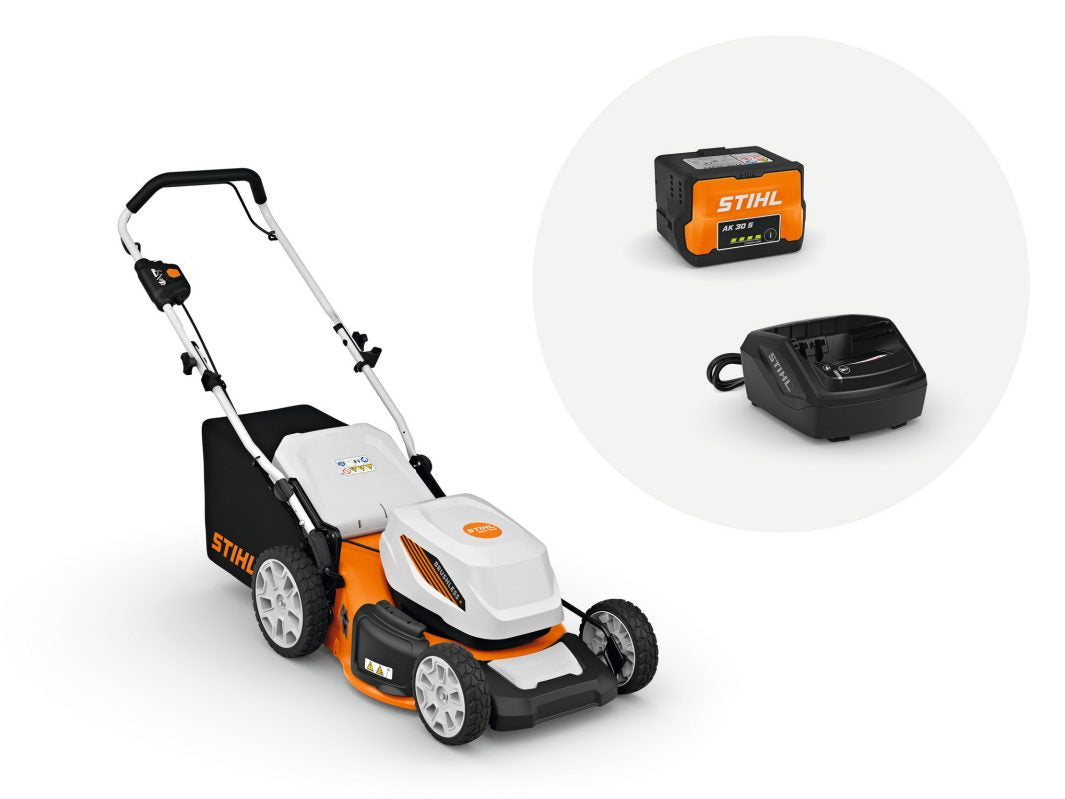
The STIHL RMA 348 is a strong option for homeowners who want a compact push mower with traditional steel construction.
Its 18-inch cutting width works well around urban landscaping and tighter areas. It can mulch, rear bag, or side discharge and uses batteries from STIHL’s AK System.
It is best suited to customers who do not need self-propelled drive and want to use the same battery platform across several homeowner tools.
STIHL RMA 348 V
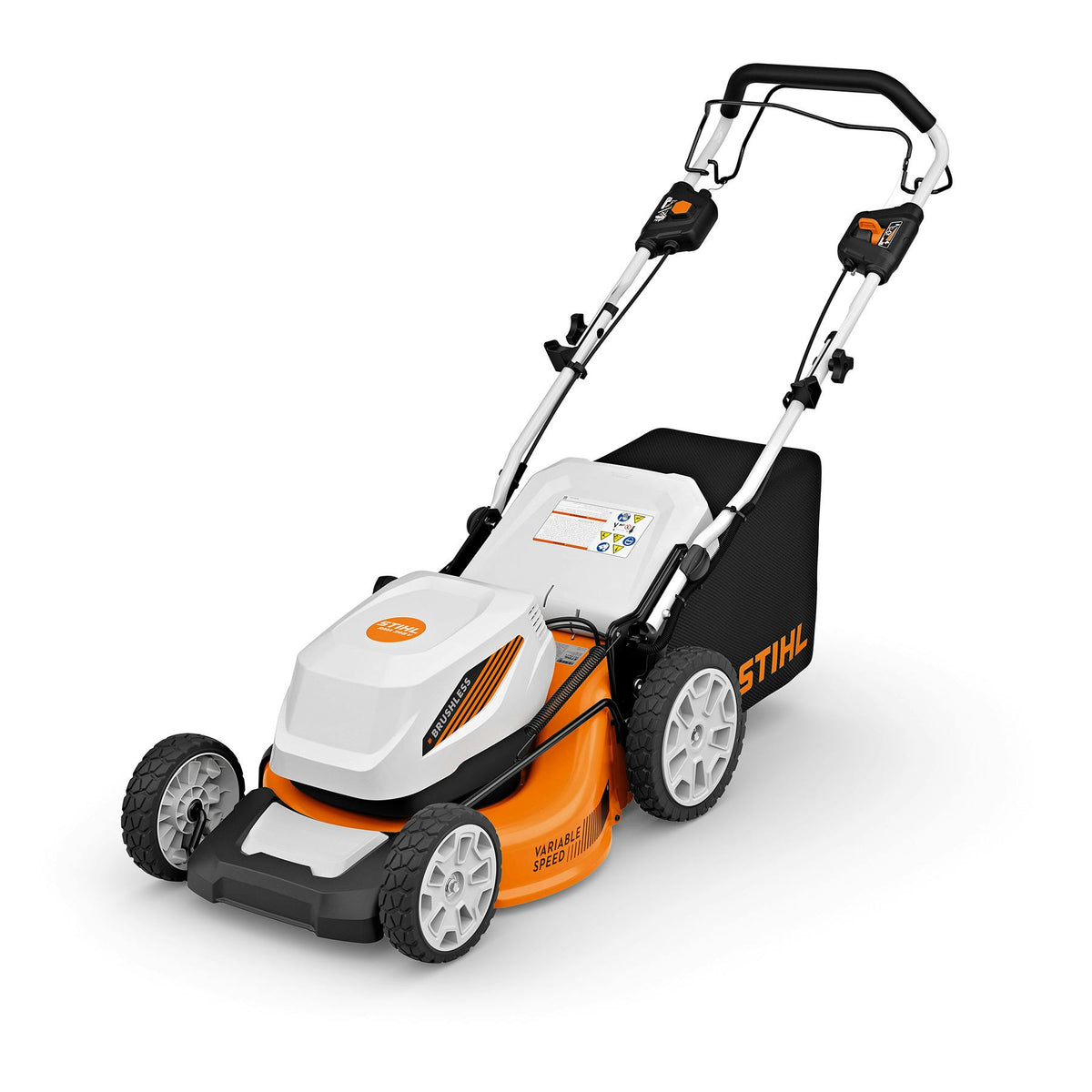
The RMA 348 V builds on the same general platform but adds adjustable Vario wheel drive.
That makes it easier to use on slopes, longer lawns, and properties where the operator wants assistance without moving to a much larger mower.
Toro 60V Recycler
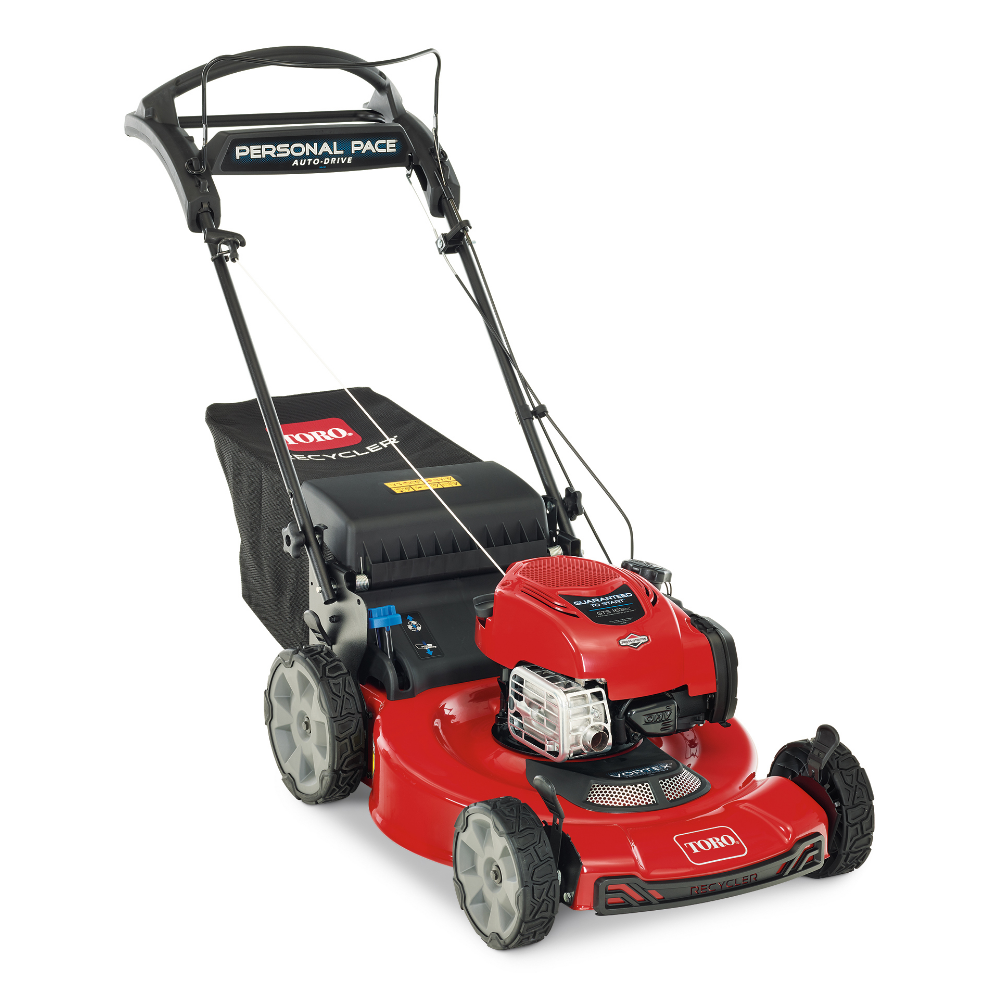
Toro’s 60V Recycler family is suited to homeowners who want familiar walk-behind mower features with battery power.
Depending on the model, available features include Recycler mulching technology, 21-inch or 22-inch decks, Personal Pace self-propel, and SmartStow storage.
Honda Battery Lawn Mowers
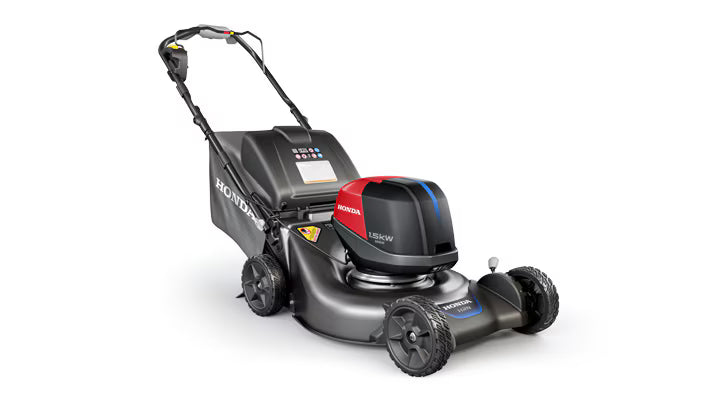
Honda has entered the Canadian battery mower market with residential models designed to provide performance comparable to the gas mowers they replace.
Honda describes its HRN-BV as offering power and torque comparable to the GCV gas model it replaces, while its premium HRX battery family is designed around Honda’s established approach to residential cutting performance and construction.
These models may appeal to homeowners who have trusted Honda gas mowers but are now ready to move to battery power.
What We Tell Customers Who Are Unsure
Do not begin with battery versus gas.
Begin with your lawn.
How large is it? Is it flat or sloped? How often do you mow? Does the grass regularly become tall or wet? Do you need self-propelled drive? Where will the mower and battery be stored? Do you already own tools from a compatible battery platform?
Once those questions are answered, the power-source decision usually becomes much easier.
Battery is no longer a compromise for every homeowner. On the right property, it can be the easier and more enjoyable mower to own.
Gas is not outdated simply because batteries have improved. On larger or more demanding properties, it can still provide the flexibility and continuous operation the job requires.
The goal is not to choose the newest technology. It is to choose the mower that will reliably finish your lawn and still make sense several seasons from now.
Battery vs. Gas Lawn Mower Buying Checklist
Before choosing a mower, consider:
-
The amount of grass you actually mow
-
Typical mowing time
-
Flat, sloped, or uneven terrain
-
How often the grass becomes overgrown
-
Whether you mulch, bag, or side discharge
-
Push or self-propelled drive
-
Available storage space
-
Battery storage during winter
-
Fuel storage and maintenance comfort
-
Existing compatible batteries
-
Access to replacement batteries and parts
-
Local service support
Frequently Asked Questions
Are battery lawn mowers as powerful as gas?
Quality battery mowers can provide strong cutting performance for maintained residential lawns. Gas may retain an advantage for extended mowing, very heavy growth, and applications where quick refuelling is important.
Can a battery mower cut wet grass?
Battery mowers can cut damp or wet grass, but wet mowing increases load, reduces runtime, and can clog the deck. It may also produce a poorer finish and create slippery conditions. Mow when the lawn is reasonably dry whenever possible.
How much lawn can a battery mower cut?
The answer depends on the mower, battery capacity, grass conditions, self-propelled use, terrain, and cutting height. Published estimates should be treated as a guide rather than a guarantee for every property.
Is a battery mower good for a large yard?
It can be, provided the mower has enough battery capacity and the owner has access to additional charged batteries when needed. For very large properties or extended sessions, gas may still be more convenient.
Do battery mowers need oil?
Battery lawn mowers do not require engine oil because they do not have a gasoline engine. The blade, deck, wheels, drive system, battery, and controls still require inspection and care.
Can I leave a lawn mower battery in the garage over winter?
Follow the battery manufacturer’s storage instructions. Calgary’s extreme winter temperatures can make an unheated garage or shed unsuitable for long-term battery storage. Remove the battery from the mower and keep it in an approved, protected location.
Are gas lawn mowers being discontinued?
Battery options are expanding, but gas lawn mowers remain available and continue to suit many homeowners. Product availability varies by manufacturer and model year.
Is battery cheaper than gas over time?
Battery can reduce spending on fuel and engine maintenance, especially when batteries are shared across several tools. Replacement-battery cost and the length of ownership should still be included in the comparison.
Which battery mower platform is best?
The best platform is the one that supports the tools you need, provides appropriate battery capacities, and has dependable local parts, warranty, and service support. STIHL AK, Toro 60V Flex-Force, and current Honda battery systems each serve different customers.
Where can I compare battery and gas lawn mowers in Calgary?
Arns Equipment carries walk-behind mowers from STIHL, Toro, Honda, and other established outdoor power equipment brands. Our Calgary team can help compare deck sizes, battery capacity, drive systems, construction, maintenance, and long-term support. Arns currently offers a broad selection of walk-behind battery mowers across these brands.
Find the Right Lawn Mower at Arns Equipment
The best mower is the one that suits your lawn and the way you prefer to maintain it.
For some Calgary homeowners, that means a quiet battery mower that starts with the press of a button and shares batteries with the rest of their yard tools.
For others, it means a dependable gas mower that can run for hours, handle difficult grass, and return to work after a quick refill.
At Arns Equipment, we sell both because both still have a place.
Bring us your lawn size, terrain, current mowing time, and the equipment you already own. We will help you compare battery and gas options without pushing you toward a power source that does not fit your property.
That honest approach, backed by local parts and service support, is part of why Arns Equipment has become Calgary’s most trusted OPE dealer.
