
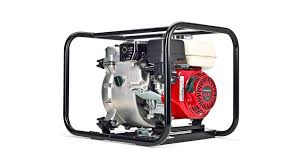
The Honda WT20XK4C 2-inch trash pump is a heavy-duty construction pump designed for contractors, municipalities, acreage owners, rental fleets, and property-maintenance crews that need to move dirty water containing mud, gravel, stones, and other suspended debris.
Powered by a commercial-grade Honda GX160 four-stroke engine, the WT20XK4C can move up to 710 litres per minute, or approximately 42,600 litres per hour, through its 2-inch suction and discharge ports. Unlike Honda’s WX and WH clean-water pumps, the WT20 is purpose-built for demanding dewatering applications where the source may contain rocks and unwanted debris.
Its deep-vane cast-iron impeller, durable pump housing, serviceable cleanout design, full tubular frame, and anti-vibration mounts make it suitable for construction sites, flood cleanup, excavations, ditches, and rural properties where a conventional transfer pump would be vulnerable to clogging or damage.
Our Recommendation
We recommend the Honda WT20XK4C to customers who need a genuinely debris-capable pump but still want a machine that can be moved between jobs without stepping up to a larger 3-inch or 4-inch platform.
It is one of the strongest choices in Honda’s pump lineup for:
- Construction excavation dewatering
- Muddy floodwater
- Water containing gravel or small stones
- Ditches and drainage channels
- Foundation and utility work
- Municipal maintenance
- Rental fleets
- Farm and acreage drainage
- Storm cleanup
- Contractors working in changing site conditions
The WT20XK4C is not the model we recommend for clean-water irrigation or sprinkler systems. The Honda WH15XTC and WH20XTC are designed to generate greater outlet pressure and are better suited to those applications.
It may also be more pump than a homeowner needs for emptying a clean pool or transferring water between tanks. In those situations, the lighter WX15TCX will usually be easier to carry and less expensive to equip.
The WT20 earns its additional weight and cost when dirty water, debris handling, service access, and jobsite durability are genuine requirements.
Built for Dirty Water and Construction Debris
The defining advantage of the WT20XK4C is its ability to move water that would be unsuitable for a conventional clean-water pump.
Honda identifies the WT20 as a 2-inch construction trash pump capable of handling water containing rocks and debris. The comparable WT20 platform is rated to pass solids up to approximately 13/16 inch, or about 20 mm, provided the material can pass through the suction strainer and pump passages.
Suitable applications can include water containing:
- Mud
- Sand
- Gravel
- Small stones
- Organic debris
- Leaves
- Small wood fragments
- Construction runoff
- Sediment
- Flood debris
A trash pump is more tolerant of contaminated water, but it is not indestructible. Oversized rocks, wire, fabric, rope, long sticks, plastic bags, and highly abrasive slurry can still obstruct or damage the pump.
The suction strainer should always be used, even when the pump is designed to pass solids.
710 Litres per Minute of Pumping Capacity
Honda rates the WT20XK4C for up to:
- 710 litres per minute
- 156 Imperial gallons per minute
- 42,600 litres per hour
- 9,360 Imperial gallons per hour
That capacity allows the pump to remove a substantial amount of water from excavations, flooded areas, ditches, and temporary drainage systems.
The published maximum represents favourable operating conditions. Actual output will depend on:
- Suction lift
- Discharge elevation
- Hose length
- Hose diameter
- Fittings and bends
- Solids concentration
- Strainer condition
- Engine speed
- Impeller wear
- Air leaks in the suction system
As total head and restriction increase, flow decreases.
For best performance, place the pump close to the water source and use hoses that are no longer than necessary. Honda’s operating guidance specifically notes that output falls as pumping height increases.
2-Inch Suction and Discharge Ports
The WT20XK4C uses 50 mm or 2-inch suction and discharge ports.
A complete setup normally requires:
- Reinforced 2-inch suction hose
- A compatible trash-pump strainer
- 2-inch discharge hose
- Camlock or threaded fittings
- Hose clamps
- Gaskets
- Suitable discharge routing
Honda lists several compatible 2-inch construction-pump accessories, including camlock kits, hose-shank couplers, strainers, and service components.
The suction hose must be reinforced so it does not collapse under vacuum. Lightweight lay-flat discharge hose is not normally suitable for use as an intake hose.
The discharge side can use a suitable lay-flat hose where the pressure rating and application permit.
Maximum Total Head of 30 Metres
The Canadian WT20XK4C specification lists a maximum total head of 30 metres or approximately 98 feet, along with a maximum suction lift of 8 metres or approximately 26 feet.
Total head includes the combined resistance created by:
- Vertical suction lift
- Vertical discharge rise
- Friction through the hose
- Elbows and fittings
- Valves
- Discharge restrictions
The pump will not deliver its maximum flow at maximum head. Those numbers represent different points on its performance curve.
A more realistic installation keeps the suction lift low and uses the pump primarily to push water through the discharge line.
Up to 8 Metres of Suction Lift
The WT20XK4C is rated for up to 8 metres or 26 feet of suction lift under suitable conditions. It is also listed with a priming time of approximately 60 seconds at a 5-metre suction height under test conditions.
Real-world priming performance is affected by:
- Hose length
- Air leaks
- Elevation above sea level
- Water temperature
- Strainer restriction
- Hose diameter
- Pump condition
- Mechanical-seal condition
- Priming-water level
A small air leak at a fitting may prevent the pump from priming even when no water visibly leaks from the connection.
Position the pump as close to the water level as the site safely allows. Centrifugal pumps are generally much more effective at pushing water than pulling it.
Honda GX160 Commercial Engine
The WT20XK4C is powered by a 163 cc Honda GX160T2 four-stroke OHV engine with recoil starting and a fuel tank capacity of approximately 3.1 litres.
Honda GX engines are widely used in construction, rental, agricultural, and industrial equipment because they are designed for commercial operating conditions.
Because this is a four-stroke engine:
- Gasoline and engine oil remain separate
- Two-cycle oil is not mixed into the fuel
- The engine-oil level must be checked before operation
- The machine should be kept level while running
Routine engine care includes:
- Checking oil before each use
- Changing oil at the specified intervals
- Inspecting the air filter
- Checking the spark plug
- Keeping cooling fins clear
- Using fresh gasoline
- Preparing the fuel system correctly before storage
The engine must be operated outdoors because its exhaust contains carbon monoxide.
Honda Oil Alert Protection
The WT20XK4C includes Honda’s Oil Alert System.
If the engine-oil level drops below a safe operating point, the system is designed to shut down the engine before insufficient lubrication causes more serious internal damage.
Oil Alert is a backup protection system, not a substitute for checking the oil.
It also protects only the engine. It does not detect:
- A dry pump housing
- Blocked water flow
- A clogged strainer
- A damaged impeller
- A collapsed suction hose
- A leaking mechanical seal
If the engine stops unexpectedly, check the oil level along with fuel, ventilation, and pump loading.
Heavy-Duty Deep-Vane Impeller
Honda equips the WT20 with a heavy-duty deep-vane impeller designed to move water containing solids and debris.
The impeller is listed as a conical cast-iron component, providing greater wear resistance than the lighter aluminum components commonly found in general-purpose transfer pumps.
This construction is important when pumping abrasive material such as:
- Sand
- Silt
- Gravel
- Mud
- Construction runoff
Trash-pump components still wear over time. Highly abrasive water can gradually reduce clearances and pumping performance, even when the solids are within the pump’s size capacity.
Extra-Thick Cast-Aluminum Pump Housing
The WT20XK4C uses an extra-thick cast-aluminum pump housing designed for the impacts and vibration associated with construction work. Honda pairs this housing with the deep-vane impeller to create a durable debris-handling pump assembly.
The housing should be inspected for:
- Cracks
- Impact damage
- Loose fasteners
- Seal leakage
- Excessive wear
- Damage caused by freezing
No pump housing should be struck with tools to remove debris. Use the cleanout system and follow Honda’s servicing instructions.
Easy-Access Cleanout Port
One of the practical differences between a trash pump and a conventional transfer pump is service access.
The WT20 includes an easy-access cleanout arrangement so the pump housing can be opened and flushed if debris becomes trapped inside.
This is especially useful after pumping:
- Muddy construction water
- Sand and gravel
- Organic debris
- Floodwater
- Water containing leaves or wood fragments
Before opening the housing:
- Shut down the engine.
- Allow hot components to cool.
- Disconnect the spark-plug cap.
- Drain pressure and water safely.
- Follow Honda’s manual.
- Wear gloves and eye protection.
Never reach into the pump while the engine could start.
The cleanout feature makes servicing easier, but it does not mean the pump can be left full of sediment after each job.
Full-Frame Construction
Honda builds the WT20XK4C within a heavy-duty tubular steel frame.
The frame helps:
- Protect the engine and pump
- Provide stable lifting points
- Keep major components above the ground
- Support the machine during operation
- Reduce damage during truck and trailer transport
Honda also notes that the full-frame design and anti-vibration mounting system help prevent the machine from sinking into soft ground.
The pump should still be placed on a stable base whenever possible. Soft mud, steep ground, erosion, and moving hoses can cause the unit to shift or settle.
Anti-Vibration Mounting System
The engine and pump assembly use anti-vibration mounts to reduce movement transferred into the frame and ground.
This helps:
- Stabilize the pump
- Reduce frame fatigue
- Limit movement during operation
- Improve durability
- Protect connected hoses and fittings
The mounts should be inspected periodically for cracking, loosening, or deterioration, particularly on rental and contractor equipment that is transported frequently.
Self-Priming Centrifugal Design
The WT20XK4C is a self-priming centrifugal pump.
Self-priming does not mean the pump can be started dry.
Before starting, fill the pump housing completely with clean water through the priming port. Once the housing is filled and the intake system is airtight, the pump can remove air from the suction hose and begin drawing water.
Running the pump dry can overheat and damage the mechanical seal.
A proper setup should include:
- Place the pump near the water source.
- Connect the reinforced suction hose.
- Fit the correct suction strainer.
- Tighten every intake connection.
- Connect the discharge hose.
- Fill the pump housing with clean water.
- Check the engine oil and fuel.
- Start the engine.
- Confirm that the pump primes and begins discharging water.
- Inspect the system for leaks and hose movement.
If the pump does not prime, shut it down rather than allowing it to continue running dry.
Honda Water and Trash Pump Comparison
| Model | Pump Type | Port Size | Maximum Flow | Approx. Dry Weight | Best Suited For |
|---|---|---|---|---|---|
| Honda WX15TCX | Portable clean-water transfer | 1.5" | 240 L/min | 9 kg | Pools, tanks, cottages, and light drainage |
| Honda WH15XTC | High-pressure clean-water pump | 1.5" | 400 L/min | Approx. 22 kg | Irrigation, sprinklers, and longer hose runs |
| Honda WH20XTC | High-pressure clean-water pump | 2" | 500 L/min | Approx. 23.5 kg | Larger irrigation and commercial clean-water transfer |
| Honda WT20XK4C | Construction trash pump | 2" | 710 L/min | 47 kg | Muddy water, gravel, flood debris, and construction dewatering |
| Honda WT30XK4C | Construction trash pump | 3" | Higher-volume debris pumping | Larger platform | Excavations, larger floods, and commercial dewatering |
| Honda WT40XK3C | Construction trash pump | 4" | Highest-capacity model in this group | Larger platform | Major drainage projects and high-volume dirty-water removal |
Honda separates the WT construction pumps from its transfer and high-pressure families because they are built for different water conditions and workloads.
Honda WT20XK4C vs WH20XTC
The WT20XK4C and WH20XTC both use 2-inch ports, but they are designed for very different applications.
| Consideration | Honda WH20XTC | Honda WT20XK4C |
|---|---|---|
| Pump category | High-pressure clean-water pump | Construction trash pump |
| Port size | 2" | 2" |
| Maximum flow | 500 L/min | 710 L/min |
| Primary advantage | Pressure and irrigation performance | Debris handling and high-volume dewatering |
| Solids handling | Limited | Designed for rocks and debris |
| Approximate weight | 23.5 kg | 47 kg |
| Best use | Sprinklers, long hoses, and uphill pumping | Muddy excavation water and flood cleanup |
Choose the WH20XTC when:
- The water is clean
- Irrigation is the main application
- Strong outlet pressure is required
- Long hoses or elevation are involved
- Lower weight matters
Choose the WT20XK4C when:
- The water contains mud or gravel
- Construction debris may be present
- High-volume dewatering is required
- Pump cleanout access matters
- Jobsite durability is a priority
Using the WH20 in contaminated water risks pump damage. Buying the heavier WT20 for clean-water irrigation may add cost and weight without providing the pressure characteristics the system needs.
Honda WT20XK4C vs WT30XK4C
The WT30XK4C is the next step up in Honda’s construction-pump family.
The WT20XK4C is usually the better choice when:
- 2-inch hoses provide enough capacity
- Portability matters
- One or two people must move the pump
- Job sizes are moderate
- Trailer space is limited
- Lower hose and fitting costs are valuable
The WT30XK4C becomes more useful when:
- Larger excavations are common
- Faster dewatering can reduce labour or equipment downtime
- A 3-inch hose system is practical
- Higher water volume is regularly available
- The crew can manage a larger and heavier pump package
The pump is only part of the decision. Three-inch hoses are heavier, bulkier, and more difficult to handle than two-inch hoses, particularly when they are wet or filled with sediment.
Honda WT20XK4C vs WT40XK3C
The WT40XK3C is intended for major high-volume dewatering work.
The WT20XK4C is the better fit for:
- Utility work
- Small and medium excavations
- Residential construction
- Rental fleets
- Acreage drainage
- Jobs where portability matters
The WT40XK3C is more appropriate for:
- Large floods
- Major excavations
- Road construction
- Municipal drainage
- Industrial sites
- Applications where maximum volume is more important than portability
Choosing the largest pump does not always produce the most efficient setup. The water source, hose package, transport method, crew size, and discharge location all need to support the larger machine.
Trash Pump vs Transfer Pump
A trash pump and transfer pump are not simply different sizes of the same equipment.
Trash Pump
A trash pump is designed with larger internal passages, durable wear components, and service access for contaminated water.
Typical uses include:
- Muddy excavations
- Flood cleanup
- Ditches
- Water containing gravel
- Construction runoff
- Commercial drainage
The Honda WT20, WT30, and WT40 belong to this category.
Transfer Pump
A transfer pump is designed to move relatively clean water efficiently.
Typical uses include:
- Emptying pools
- Filling tanks
- Moving water between reservoirs
- Light drainage
- General property maintenance
The Honda WX and WB models belong to this category.
A trash pump may be heavier and more expensive, but it is the correct investment when debris would regularly clog or damage a clean-water model.
What to Know Before Buying the WT20XK4C
It is substantially heavier than a clean-water pump
The WT20XK4C weighs approximately 47 kg or 104 lb before fuel, water, and attached hoses are considered.
Two people should generally plan to lift it into a truck or trailer.
It still requires a suction strainer
A trash pump can pass debris, but the strainer prevents oversized objects from entering the system.
It must be primed before starting
Self-priming does not mean dry-running. The pump housing needs water before the engine is started.
Dirty water accelerates wear
Sand and fine grit can be highly abrasive. Debris tolerance does not make the pump immune to impeller, volute, and seal wear.
Maximum flow depends on the installation
The pump will not deliver 710 litres per minute through every hose arrangement. Lift, friction, fittings, solids, and hose length all reduce output.
The cleanout system needs regular use
Sediment left inside the housing can harden, corrode components, obstruct the impeller, or freeze during cold weather.
It is not intended for hazardous liquids
Do not use the pump for fuels, solvents, corrosive chemicals, sewage, or other liquids unless Honda specifically approves the application.
Building the Right Hose Package
The WT20XK4C needs a hose system capable of handling dirty water without collapsing or creating excessive restriction.
The suction side should include:
- Reinforced 2-inch intake hose
- Heavy-duty suction strainer
- Compatible camlock or threaded fittings
- Airtight gaskets
- Secure clamps
The discharge side may use:
- 2-inch lay-flat discharge hose
- Heavy-duty rubber hose
- Camlock connections
- Suitable reducers or adapters
- A stable discharge point
Keep the suction hose as short and straight as practical.
Every intake-side connection must be airtight. A small leak can cause slow priming, reduced output, surging, or complete loss of suction.
Honda offers compatible 2-inch construction-pump accessory kits and couplers for this family.
Pump Placement and Discharge Planning
A trash pump should be placed on firm, level ground close to the water source.
Before starting, consider:
- Whether the ground can support the pump
- Whether rising water could reach the engine
- Where exhaust will travel
- Whether the discharge will erode soil
- Whether the hose crosses a road or walking path
- Whether the outlet could flood neighbouring property
- Whether sediment discharge is legally permitted
- Whether the hose can move when pressurized
The discharge point can release a large volume of water quickly. Uncontrolled flow may wash out soil, undermine slopes, damage landscaping, or overload drainage infrastructure.
Operating Safety
Portable gasoline trash pumps combine several hazards:
- Carbon monoxide
- Hot engine and exhaust surfaces
- Flammable fuel
- Contaminated water
- Heavy equipment
- Moving hoses
- Uneven ground
- Pressurized discharge
Operators should:
- Use the pump outdoors only
- Direct exhaust away from people and occupied spaces
- Keep the machine above rising water
- Allow the engine to cool before refuelling
- Keep fuel away from ignition sources
- Secure suction and discharge hoses
- Keep children and bystanders away
- Wear gloves, eye protection, hearing protection, and suitable footwear
- Avoid direct contact with contaminated water
- Wash thoroughly after handling flood or construction water
- Follow Honda’s current operator manual
Do not operate the engine inside a building, basement, excavation, trailer, or partially enclosed area.
Cleaning After Dirty-Water Use
The pump should be cleaned after every dirty-water job.
A practical post-use routine includes:
- Shut down the engine.
- Allow the machine to cool.
- Drain the pump safely.
- Open the cleanout housing as directed by Honda.
- Remove stones, mud, and organic material.
- Flush the housing with clean water.
- Clean the suction strainer.
- Inspect the impeller and housing for wear.
- Check the mechanical seal for leakage.
- Drain the pump again before storage.
Cleaning is especially important after pumping clay, sand, concrete runoff, or fine sediment that can harden inside the housing.
Routine Maintenance
Important WT20XK4C maintenance includes:
- Checking engine oil before use
- Changing oil at Honda’s recommended intervals
- Inspecting and servicing the air filter
- Checking the spark plug
- Using fresh gasoline
- Cleaning the suction strainer
- Inspecting hose gaskets and fittings
- Flushing the pump housing
- Inspecting the impeller and volute
- Checking for mechanical-seal leakage
- Inspecting anti-vibration mounts
- Tightening frame and pump hardware
- Keeping engine cooling fins clear
- Draining the housing after use
The pump should be shut down if it develops:
- Unusual vibration
- Grinding or rattling noises
- Severe leakage
- Reduced output
- Difficulty priming
- Surging flow
- Engine overload
- Visible frame or housing damage
Continuing to run a partially blocked or damaged pump may turn a minor service issue into a major repair.
Winter Storage in Canada
Water and sediment left inside the WT20 can freeze and crack the pump housing or damage internal components.
Before winter storage:
- Drain the pump completely
- Open and clean the pump housing
- Flush out mud and debris
- Drain all hoses and fittings
- Clean the suction strainer
- Follow Honda’s fuel-storage procedure
- Check or change the engine oil
- Service the air filter
- Inspect the frame and mounts
- Protect open ports from dirt and pests
- Store the pump in a dry, secure location
A trash pump used during freezing weather should be drained promptly after each job rather than left outside with water inside the housing.
Why Buy Your Honda WT20XK4C From Arns?
Arns Equipment is a family-owned Honda Power Equipment dealer serving Calgary, Southern Alberta, and customers across Canada. Our team brings more than 80 years of outdoor power equipment experience to pump selection, service, and parts support.
When you purchase the Honda WT20XK4C from Arns, our team can help you:
- Confirm whether your water requires a trash pump
- Compare the WT20 with the WH20, WT30, and WT40
- Select the correct suction and discharge hoses
- Match camlocks, strainers, clamps, and adapters
- Estimate the effect of lift and hose length
- Plan transport and jobsite placement
- Review cleaning and winterization requirements
- Source Honda maintenance and repair parts through PartsHouse.ca
- Arrange local Honda warranty assistance and professional service
- Avoid purchasing a large construction pump when a lighter clean-water model is sufficient
Honda supports its pump lineup through a Canadian dealer network with genuine replacement parts and trained service assistance.
For contractors, municipalities, acreage owners, rental fleets, and property professionals who need a portable 2-inch pump capable of handling dirty water and suspended debris, the Honda WT20XK4C offers a strong combination of 710-litre-per-minute capacity, commercial GX160 power, heavy-duty construction, and serviceable trash-pump design.
Product title
Vendor
$19.99 | $24.99
Product title
Vendor
$19.99 | $24.99
Product title
Vendor
$19.99 | $24.99
Product title
Vendor
$19.99 | $24.99
Product title
Vendor
$19.99 | $24.99
Product title
Vendor
$19.99 | $24.99
Product title
Vendor
$19.99 | $24.99
Product title
Vendor
$19.99 | $24.99
Product title
Vendor
$19.99 | $24.99
Product title
Vendor
$19.99 | $24.99
Product title
Vendor
$19.99 | $24.99
Product title
Vendor
$19.99 | $24.99

