
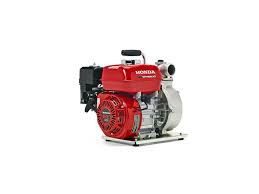
The Honda WH20XTC 2-inch high-pressure water pump is built for acreage owners, agricultural operators, landscapers, contractors, and property-maintenance crews that need to move clean water with both strong volume and higher outlet pressure.
Powered by a commercial-grade Honda GX160 four-stroke engine, the WH20XTC can move up to 500 litres per minute, or approximately 30,000 litres per hour, through its 2-inch suction and discharge ports. It can also produce up to 61 psi, making it particularly useful for irrigation, sprinkler systems, long hose runs, water delivery across elevation changes, and compatible high-pressure nozzles.
Although the current Arns product title refers to the WH20XTC as a trash pump, Honda classifies it as a high-pressure clean-water pump. It is not designed to handle rocks, gravel, mud, or the larger suspended debris accepted by Honda’s WT-series construction trash pumps. Making that distinction clear helps customers select the correct pump and avoid preventable damage.
Our Recommendation
We recommend the Honda WH20XTC to customers who need more flow and pressure than the smaller WH15XTC can provide, particularly when operating irrigation systems or moving water through longer 2-inch hose runs.
It is a strong choice for:
- Acreage and agricultural irrigation
- Temporary sprinkler systems
- Filling distant or elevated water tanks
- Moving water uphill
- Commercial landscape watering
- Supplying compatible high-pressure nozzles
- Clean-water transfer over longer distances
- Contractors who need a portable high-output pump
- Properties where both volume and pressure matter
The WH20XTC is not the model we recommend for muddy construction water, flooded excavations containing gravel, or water with significant debris. Those applications should be handled by a Honda WT-series trash pump.
Customers who only need to move clean water between nearby tanks, empty a pool, or complete basic drainage may also find a standard transfer pump more economical. The WH20XTC earns its place when pressure and distance are meaningful parts of the job.
High-Pressure Performance Through 2-Inch Ports
The WH20XTC combines high-pressure output with the larger hose capacity of a 2-inch pump.
Honda rates it for:
- 500 litres per minute
- 110 Imperial gallons per minute
- 30,000 litres per hour
- 6,600 Imperial gallons per hour
- Maximum pressure of 61 psi
- 50 mm or 2-inch suction and discharge ports
This gives it more flow and pressure than the WH15XTC while allowing the use of larger hose that can reduce friction losses during longer water-transfer and irrigation jobs.
Maximum flow and maximum pressure are measured at different points on the pump curve. The pump does not deliver 500 litres per minute while simultaneously operating at 61 psi. Available flow decreases as hose resistance, elevation, and outlet pressure increase.
What Is the Honda WH20XTC Designed to Pump?
The WH20XTC is intended for relatively clean water.
Suitable water sources may include:
- Ponds with a properly positioned strainer
- Irrigation reservoirs
- Dugouts with minimal suspended debris
- Rainwater tanks
- Cisterns
- Swimming pools
- Agricultural water storage
- Clean construction water
- Floodwater without significant solids
- Water being moved between tanks
The suction strainer should always be installed. Honda includes a hose strainer with the pump to help prevent oversized material from entering the pump body.
When pumping from a pond, ditch, or dugout, the strainer should be suspended above the bottom rather than placed directly into sediment, weeds, sand, or loose gravel.
What Should You Avoid Pumping?
The WH20XTC is not a solids-handling construction pump.
Avoid using it for water containing significant amounts of:
- Rocks
- Gravel
- Mud
- Sand
- Sticks
- Leaves
- Wood chips
- Construction debris
- Thick sludge
- Sewage
It should also not be used for gasoline, diesel fuel, solvents, corrosive chemicals, saltwater, or other liquids unless Honda specifically approves the application.
Honda separates its high-pressure pumps from its construction pumps. The WT-series is designed to remove water containing rocks and unwanted debris, while the WH series is designed to move cleaner water at greater pressure.
Honda GX160 Commercial-Grade Engine
The WH20XTC is powered by a Honda GX160T2 four-stroke, overhead-valve engine.
Honda GX engines are commonly used in commercial construction, agricultural, rental, and industrial equipment because they are designed for dependable starting, fuel efficiency, and long service life.
The WH20XTC uses:
- Recoil starting
- A separate engine-oil sump
- Approximately 3.1 litres of fuel capacity
- Direct drive between the engine and pump
- A mechanical centrifugal pump and seal system
Because the engine is four-stroke, gasoline and oil remain separate. Two-cycle oil must not be mixed into the fuel.
Routine engine care includes:
- Checking engine oil before each use
- Using fresh gasoline
- Cleaning or replacing the air filter
- Inspecting the spark plug
- Keeping cooling passages clear
- Following Honda’s oil-change schedule
- Preparing the fuel system correctly before storage
The pump should be operated on firm, level ground to support correct engine lubrication and stable water flow.
Honda Oil Alert Protection
Honda equips the WH20XTC with its Oil Alert system.
If the engine-oil level falls below a safe operating range, Oil Alert is designed to stop the engine before a lack of lubrication causes more serious damage.
This protects the engine, but it does not replace checking the oil before use. It also does not monitor the water inside the pump housing.
A pump can have the correct engine-oil level and still be damaged if the pump body is run without priming water.
Self-Priming Centrifugal Pump
The WH20XTC uses a self-priming mechanical centrifugal pump.
Self-priming means that once the pump housing has been filled with water, the pump can evacuate air from a properly sealed suction hose and begin drawing water from below the pump.
It does not mean the pump can be started dry.
Before starting:
- Position the pump close to the water source.
- Connect a reinforced 2-inch suction hose.
- Install the suction strainer.
- Confirm that all intake connections are airtight.
- Attach and secure the discharge hose.
- Fill the pump body through the priming port.
- Check the engine-oil and fuel levels.
- Start the engine according to Honda’s instructions.
- Confirm that the pump establishes water flow.
Running the pump housing dry can overheat and damage the mechanical seal.
2-Inch Suction and Discharge Ports
The WH20XTC uses 50 mm or 2-inch suction and discharge ports.
A complete pumping system may require:
- Reinforced 2-inch suction hose
- Compatible suction strainer
- Pressure-rated 2-inch discharge hose
- Threaded adapters or camlock fittings
- Hose clamps
- Irrigation connectors
- Valves
- Compatible sprinkler or nozzle connections
The suction hose must be designed to resist collapse under vacuum. Lightweight lay-flat discharge hose should not normally be used on the intake side.
Keeping the hose diameter at two inches for as much of the system as possible can help reduce friction loss. Reducing to a smaller hose, nozzle, or fitting increases resistance and lowers delivered flow.
Designed for Irrigation and Sprinklers
Honda specifically positions the WH20XTC for high-pressure applications such as sprinklers and nozzles. It is designed to perform tasks ranging from general water transfer to commercial irrigation.
Potential applications include:
- Watering large acreages
- Supplying temporary irrigation lines
- Operating compatible impact sprinklers
- Delivering water across commercial landscapes
- Filling tanks located uphill
- Supporting high-pressure washing or spraying setups where appropriate
- Moving water through long hose runs
The pump’s maximum pressure does not guarantee that it can operate every sprinkler system.
Before connecting irrigation equipment, determine:
- Required flow per sprinkler
- Required operating pressure
- Number of sprinklers
- Hose length
- Hose diameter
- Elevation gain
- Number of bends and fittings
- Pressure loss through valves and filters
The combined flow requirement must remain within the pump’s output at the actual system pressure.
Suitable for Longer Hose Runs
Long discharge hoses create friction that reduces delivered flow.
The WH20XTC’s pressure capability makes it better suited to longer hose runs than a standard transfer pump, but system design still matters.
Performance can be improved by:
- Using full-size 2-inch hose
- Minimizing unnecessary hose length
- Avoiding sharp bends
- Using full-flow fittings
- Keeping valves fully open where appropriate
- Avoiding premature reductions in hose diameter
- Positioning the pump close to the water source
A long 2-inch hose will generally create less restriction than the same length of smaller-diameter hose at a comparable flow rate.
Maximum Head and Real-World Output
Total dynamic head describes the full resistance the pump must overcome.
It includes:
- Vertical suction lift
- Vertical discharge rise
- Hose friction
- Fitting and valve restrictions
- Pressure required at the outlet
- Restrictions created by sprinklers or nozzles
The WH20XTC’s 61 psi maximum pressure is useful for applications that require stronger water delivery, but output decreases as total head rises.
For better real-world performance:
- Place the pump close to the water source
- Keep the suction hose short
- Minimize suction lift
- Eliminate intake-side air leaks
- Use gradual bends rather than sharp turns
- Keep the suction strainer clean
Centrifugal pumps push water more effectively than they pull it. Reducing suction height can make a major difference in priming speed and delivered flow.
Portable Full-Frame Construction
The WH20XTC weighs approximately 23.5 kg or 51.8 lb. Honda equips it with a steel base and carrying handle to make transport and placement easier.
Its full-frame layout helps:
- Protect the engine and pump
- Stabilize the unit during operation
- Provide secure lifting points
- Keep components above the ground
- Simplify truck and trailer transport
One person may be able to move it over short distances, but a two-person lift may be safer when loading it into a high truck bed or carrying it over rough terrain.
The pump should be placed where it cannot shift, sink into soft ground, or be pulled over by the weight or movement of connected hoses.
Honda Water and Trash Pump Comparison
| Model | Pump Type | Port Size | Maximum Flow | Maximum Pressure or Key Capability | Best Suited For |
|---|---|---|---|---|---|
| Honda WX15TCX | Portable transfer pump | 1.5" | 240 L/min | Lightweight clean-water transfer | Pools, tanks, cottages, and small drainage jobs |
| Honda WH15XTC | High-pressure pump | 1.5" | 400 L/min | Up to 55 psi | Smaller irrigation systems, sprinklers, and long hose runs |
| Honda WH20XTC | High-pressure pump | 2" | 500 L/min | Up to 61 psi | Larger irrigation, commercial water transfer, and higher-demand spraying |
| Honda WT20XK4C | Construction trash pump | 2" | 710 L/min | Handles water containing rocks and debris | Construction dewatering, muddy water, and flood cleanup |
| Honda WT30XK4C | Construction trash pump | 3" | Higher-volume solids handling | Larger debris-capable passages | Excavations, commercial dewatering, and larger floods |
| Honda WT40XK3C | Construction trash pump | 4" | Maximum WT-series capacity | Heavy-duty high-volume debris handling | Major construction and large-scale flood pumping |
The WH20XTC is the largest high-pressure model in this comparison. The WT pumps are designed for dirty water, while the WX15 is designed around low weight and general clean-water transfer.
Honda WH20XTC vs WH15XTC
The WH20XTC provides greater flow, pressure, and hose capacity than the smaller WH15XTC.
| Consideration | Honda WH15XTC | Honda WH20XTC |
|---|---|---|
| Pump type | High-pressure | High-pressure |
| Port size | 1.5" | 2" |
| Maximum flow | 400 L/min | 500 L/min |
| Maximum pressure | 55 psi | 61 psi |
| Engine | Honda GX120 | Honda GX160 |
| Approximate dry weight | 22 kg | 23.5 kg |
| Main advantage | Smaller and slightly easier to transport | More flow, pressure, and hose capacity |
| Best use | Smaller irrigation and portable pressure work | Larger irrigation and commercial water transfer |
Choose the WH15XTC when:
- Portability matters more than maximum output
- A 1.5-inch hose package is already available
- The irrigation system has moderate water demand
- The pump will be carried frequently
Choose the WH20XTC when:
- A 2-inch hose system is preferred
- Longer runs or greater elevation are involved
- More sprinklers or higher flow are required
- The pump will support larger commercial or acreage applications
The relatively small difference in dry weight makes the WH20XTC attractive when the customer can make practical use of its additional output.
Honda WH20XTC vs WT20XK4C
The WH20XTC and WT20XK4C both use 2-inch ports, but they are designed for entirely different water conditions.
| Consideration | Honda WH20XTC | Honda WT20XK4C |
|---|---|---|
| Pump category | High-pressure clean-water pump | Construction trash pump |
| Port size | 2" | 2" |
| Maximum flow | 500 L/min | 710 L/min |
| Maximum pressure | 61 psi | Lower-pressure, high-volume design |
| Solids handling | Limited to clean or lightly contaminated water | Designed for rocks and unwanted debris |
| Approximate dry weight | 23.5 kg | Approx. 47 kg |
| Main advantage | Pressure, portability, and irrigation performance | Dirty-water durability and serviceability |
| Best use | Sprinklers, long hoses, and clean-water transfer | Construction sites, muddy floods, and excavation water |
Choose the WH20XTC when pressure and water delivery are the priority.
Choose the WT20XK4C when the source contains gravel, stones, mud, or construction debris. Honda rates the WT20 for up to 710 litres per minute and builds it specifically for dirty-water applications.
A trash pump adds considerable weight and may provide less useful pressure for irrigation. A high-pressure pump can be damaged if used in water that requires a trash pump.
Honda WH20XTC vs a Standard 2-Inch Transfer Pump
Honda also offers the WB20XT4C general-purpose 2-inch transfer pump.
| Consideration | Honda WB20XT4C | Honda WH20XTC |
|---|---|---|
| Pump type | General transfer | High-pressure |
| Port size | 2" | 2" |
| Maximum flow | 620 L/min | 500 L/min |
| Main priority | Move clean water quickly | Move clean water against greater pressure |
| Best use | General dewatering and nearby transfer | Irrigation, elevation, nozzles, and long hose runs |
The WB20XT4C moves more water under low-resistance conditions and is a strong choice for general dewatering. Honda rates it for up to 620 litres per minute.
The WH20XTC sacrifices some maximum open-flow capacity in exchange for greater pressure.
Choose based on the actual job:
- For draining a pool or moving nearby tank water, consider the WB20.
- For sprinklers, uphill pumping, long hoses, or nozzles, choose the WH20.
- For dirty water containing solids, choose the WT20.
High-Pressure Pump vs Trash Pump
The WH20XTC should be described as a high-pressure pump rather than a trash pump.
High-Pressure Pump
A high-pressure pump is designed to move relatively clean water against greater resistance.
Typical uses include:
- Irrigation
- Sprinklers
- Long discharge hoses
- Elevation changes
- Compatible nozzles
- Filling remote or elevated tanks
The Honda WH15XTC and WH20XTC belong to this group.
Trash Pump
A trash pump uses larger internal passages and serviceable components to move water containing solids.
Typical uses include:
- Muddy construction excavations
- Gravel and stones
- Flood debris
- Ditches
- Commercial dewatering
- Dirty runoff
The Honda WT20, WT30, and WT40 belong to this category.
For clarity and accuracy, I would recommend changing the visible Arns title to:
Honda WH20XTC 2-Inch High-Pressure Water Pump
The existing “trash pump” wording could be retained in redirects or backend search terms if necessary, but the main customer-facing name should reflect Honda’s classification.
What to Know Before Buying the WH20XTC
It is designed for clean water
The WH20XTC does not have the solids-handling ability of a WT-series trash pump. Always use the suction strainer.
Its main benefit is pressure
A standard transfer pump may provide more low-head flow for simple dewatering. The WH20XTC is worth choosing when pressure, distance, or elevation matters.
It requires a larger hose package
Two-inch suction and discharge hoses are bulkier and generally cost more than 1.5-inch components.
Maximum pressure and flow are not simultaneous
Flow declines as outlet pressure, elevation, and system resistance increase.
The pump must be primed
Self-priming does not mean the pump can run dry. Fill the housing before starting.
Suction fittings must be airtight
Even a small air leak can prevent the pump from priming or cause unstable output.
Hose and fitting packages may be separate
Confirm which strainer, fittings, clamps, suction hose, discharge hose, and nozzle are included before purchase.
It is not a certified firefighting pump
Honda describes the pump as suitable for use with compatible fire-hose-style nozzles, but that does not make it a certified fire-protection system. Local rules and approved equipment requirements must be followed.
Choosing the Right Hose Package
A suitable 2-inch hose package is essential to achieving the WH20XTC’s expected performance.
The suction side should include:
- Reinforced 2-inch intake hose
- Compatible suction strainer
- Correct threaded or camlock adapters
- Secure clamps
- Airtight gaskets and seals
The discharge side may include:
- Pressure-rated 2-inch hose
- Lay-flat hose where appropriate
- Irrigation fittings
- Valves
- Sprinkler adapters
- Compatible nozzles
- Camlock couplers
Do not use a hose above its rated working pressure.
Before building a system, confirm:
- Required hose length
- Elevation change
- Required outlet pressure
- Required flow
- Port thread type
- Fitting compatibility
- Water-source condition
- Whether the discharge equipment can safely handle 61 psi
The Arns water-pump collection provides a starting point for selecting the pump and compatible accessories.
Operating Safety
Portable gasoline pumps combine fuel, hot exhaust, pressure, moving water, and potentially unstable terrain.
Operators should:
- Use the pump outdoors only
- Keep exhaust away from people, doors, windows, and vents
- Place the pump on firm, level ground
- Keep it away from dry grass and combustible materials
- Allow the engine and muffler to cool before refuelling
- Secure suction and discharge hoses
- Release pressure before disconnecting fittings
- Keep children and pets away
- Wear eye protection, gloves, suitable footwear, and hearing protection
- Avoid standing in unstable or contaminated water
- Never drink water that has passed through the pump
A pressurized 2-inch hose can move forcefully if a coupling fails. Inspect clamps, camlocks, gaskets, valves, and hose condition before each use.
Routine Maintenance
Proper maintenance helps preserve starting reliability, pump pressure, and water output.
Important maintenance tasks include:
- Checking engine oil before operation
- Changing engine oil at Honda’s specified intervals
- Inspecting the air filter
- Checking the spark plug
- Using fresh gasoline
- Cleaning the suction strainer
- Inspecting hoses and seals
- Cleaning the pump housing
- Checking for mechanical-seal leakage
- Keeping cooling fins clear
- Inspecting frame and mounting hardware
- Draining the pump after use in freezing conditions
A sudden loss of pressure or flow may be caused by:
- An air leak on the suction side
- A blocked strainer
- Excessive suction lift
- A collapsed intake hose
- Insufficient priming water
- Low engine speed
- A restricted nozzle
- Impeller wear
- Mechanical-seal damage
Shut the pump down if it develops unusual vibration, abnormal noise, severe leakage, or a sudden change in performance.
Winter Storage in Canada
Water left inside the pump housing, hoses, valves, or fittings can freeze and cause damage.
Before extended winter storage:
- Drain the pump housing completely
- Drain all hoses and accessories
- Clean the suction strainer
- Follow Honda’s fuel-storage procedure
- Check or change the engine oil
- Clean the air filter
- Inspect for leaks or damage
- Protect open ports from dirt and pests
- Store the pump in a dry location
- Keep it away from ignition sources
When the pump is used during freezing weather, it should be drained promptly after operation rather than left outdoors with water inside.
Why Buy Your Honda WH20XTC From Arns?
Arns Equipment is a family-owned Honda Power Equipment dealer serving Calgary, Southern Alberta, and customers across Canada. Our team brings more than 80 years of outdoor power equipment experience to water-pump selection, setup, service, and parts support.
When you purchase the Honda WH20XTC from Arns, our team can help you:
- Confirm whether you need a high-pressure, transfer, or trash pump
- Compare the WH20XTC with the WH15XTC, WB20XT4C, and WT20XK4C
- Estimate the effects of hose length and elevation
- Select compatible suction and discharge hoses
- Match strainers, camlocks, clamps, and adapters
- Review irrigation and sprinkler requirements
- Source Honda maintenance and repair parts through PartsHouse.ca
- Arrange local Honda warranty assistance and professional service
- Avoid purchasing a high-pressure pump for water that requires solids handling
The WH20XTC is a strong fit for customers who need more than simple water transfer. Its combination of 500-litre-per-minute capacity, 61 psi maximum pressure, commercial Honda GX160 power, and 2-inch hose compatibility makes it an excellent choice for acreage irrigation, commercial landscaping, long hose runs, and clean-water applications where pressure matters just as much as volume.
Product title
Vendor
$19.99 | $24.99
Product title
Vendor
$19.99 | $24.99
Product title
Vendor
$19.99 | $24.99
Product title
Vendor
$19.99 | $24.99
Product title
Vendor
$19.99 | $24.99
Product title
Vendor
$19.99 | $24.99
Product title
Vendor
$19.99 | $24.99
Product title
Vendor
$19.99 | $24.99
Product title
Vendor
$19.99 | $24.99
Product title
Vendor
$19.99 | $24.99
Product title
Vendor
$19.99 | $24.99
Product title
Vendor
$19.99 | $24.99

