
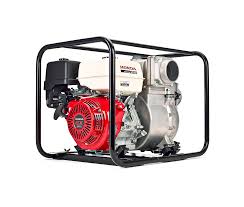
The Honda WT40XK3C 4-inch trash pump is Honda’s largest construction trash pump in this group, built for contractors, municipalities, industrial crews, agricultural operations, rental fleets, and emergency-response teams that need to move very large volumes of dirty water containing mud, rocks, gravel, and suspended debris.
Powered by a commercial-grade Honda four-stroke engine, the WT40XK3C can move up to 1,640 litres per minute, or approximately 98,400 litres per hour, through its 4-inch suction and discharge ports. It combines that high-volume output with a deep-vane cast-iron impeller, extra-thick cast-aluminum pump housing, full tubular frame, anti-vibration mounting system, and serviceable construction-pump design.
The WT40XK3C sits at the top of Honda’s Canadian construction-pump lineup. It is intended for jobs where dewatering speed can directly affect excavation progress, roadwork, flood response, municipal operations, or equipment downtime. It is substantially larger and heavier than the WT20 and WT30, so the pump, hose package, transport method, and crew requirements should all be considered before purchase.
Our Recommendation
We recommend the Honda WT40XK3C to commercial and municipal operators who regularly face enough water volume to justify a 4-inch pumping system.
It is particularly well suited to:
- Major excavation dewatering
- Road and civil construction
- Municipal drainage projects
- Large flood response
- Industrial and commercial sites
- Agricultural drainage
- Large ditches, ponds, and retention areas
- Water containing mud, gravel, and suspended debris
- Rental fleets serving heavy construction
- Crews where faster pumping can reduce project delays
The WT40XK3C is not the model we recommend simply because it is the largest pump available. It weighs approximately 78 kg or 172 lb before fuel, priming water, fittings, and hoses are added. Four-inch suction and discharge hoses are also heavy, bulky, and difficult to manage without an appropriate crew and transport system.
For smaller construction jobs, acreage drainage, utility work, or sites where portability matters, the WT20 or WT30 may be easier and more economical to operate. The WT40 becomes the stronger investment when high-volume dirty-water removal is a regular requirement rather than an occasional possibility.
Honda’s Highest-Capacity Trash Pump in This Lineup
Honda rates the WT40XK3C for up to:
- 1,640 litres per minute
- 361 Imperial gallons per minute
- 98,400 litres per hour
- 21,660 Imperial gallons per hour
That is approximately 430 litres per minute more than the WT30XK4C and more than twice the maximum flow of the WT20XK4C.
The additional capacity can make a meaningful difference when:
- An excavation must be cleared before work can resume
- Rainfall is continuing to enter a jobsite
- A municipal drain or ditch needs rapid relief
- Floodwater threatens buildings or infrastructure
- Large amounts of water must be moved during a limited operating window
- Labour and equipment are waiting for dewatering to finish
Published maximum flow is measured under favourable conditions. Actual output will decrease as suction lift, discharge elevation, hose length, fittings, sediment concentration, and other restrictions increase.
Built for Rocks, Mud, and Construction Debris
The WT40XK3C is a true construction trash pump.
Honda describes the model as capable of pumping water containing rocks and unwanted debris. Its internal passages, wear-resistant impeller, durable pump housing, and cleanout access distinguish it from Honda’s transfer and high-pressure clean-water pumps.
Suitable applications can include water containing:
- Mud
- Sand
- Silt
- Gravel
- Small stones
- Leaves
- Organic debris
- Small wood fragments
- Construction runoff
- Flood sediment
A trash pump is more tolerant of dirty water, but it is not designed to pass every object that reaches the strainer.
Wire, rope, fabric, plastic bags, long sticks, oversized rocks, and dense slurry can still obstruct or damage the pump. The suction strainer must always be installed to prevent debris larger than the pump can safely handle from entering the intake.
4-Inch Suction and Discharge Ports
The WT40XK3C uses 100 mm or 4-inch suction and discharge ports.
A complete pumping system normally requires:
- Reinforced 4-inch suction hose
- Heavy-duty 4-inch suction strainer
- Four-inch discharge hose
- Camlock or threaded fittings
- Full-size gaskets
- Secure clamps or couplers
- A safe and controlled discharge location
Honda lists service components and cam-arm assemblies for its 3-inch and 4-inch construction-pump fittings. Exact hose, camlock, and strainer packages should be confirmed before ordering.
The intake hose must be designed to resist collapse under vacuum. Standard lay-flat discharge hose should not be used as the suction hose.
Four-inch hoses can move a tremendous amount of water, but they create practical challenges:
- They require more trailer or truck space
- They are heavier when wet
- They are harder to coil and store
- They often require more than one person to position
- Fittings and strainers are larger and more expensive
- A filled hose can exert significant force on the pump and discharge point
The hose system should be planned at the same time as the pump purchase.
Maximum Total Head of 27 Metres
The WT40XK3C has a listed maximum total head of 27 metres or approximately 89 feet. Its maximum suction head is 8 metres or approximately 26 feet.
Total head includes the combined resistance created by:
- Vertical suction lift
- Vertical discharge rise
- Friction inside the hoses
- Elbows and fittings
- Valves
- Restrictions at the outlet
The pump does not provide its maximum flow at maximum head. These specifications represent different points on the performance curve.
As the pumping height and system resistance increase, delivered flow falls.
For best performance, position the pump close to the water source and keep the suction lift as low as safely possible. Centrifugal pumps are much better at pushing water than pulling it.
Up to 8 Metres of Suction Lift
Honda lists the WT40XK3C with a maximum suction lift of 8 metres or 26 feet and a priming time of approximately 150 seconds at a 5-metre suction height under specified test conditions.
Actual priming time can be affected by:
- Hose length
- Suction-hose condition
- Loose camlocks or clamps
- Damaged gaskets
- Strainer restriction
- Water temperature
- Elevation
- Mechanical-seal wear
- The amount of priming water in the housing
A small suction-side air leak may prevent the pump from priming even when no water is visibly leaking from the connection.
Keeping the suction line short, straight, well-supported, and airtight will usually improve priming and output.
Commercial Honda Four-Stroke Power
The WT40XK3C uses a commercial Honda four-stroke engine with recoil starting. Honda’s construction-pump lineup pairs durable pump assemblies with high-powered engines intended for demanding dewatering work.
Because the engine is four-stroke:
- Gasoline and engine oil remain separate
- Two-cycle oil must not be mixed into the fuel
- Engine oil should be checked before each use
- The machine should operate on firm, level ground
- Cooling openings must remain clear
Regular engine care includes:
- Checking and changing engine oil
- Inspecting the air filter
- Checking the spark plug
- Using fresh gasoline
- Keeping the cooling system clean
- Inspecting the recoil starter
- Preparing the fuel system for storage
The pump must always be operated outdoors because the engine produces carbon monoxide.
Honda Oil Alert Protection
The WT40XK3C includes Honda’s Oil Alert System.
If engine oil falls below a safe operating level, the system is designed to shut the engine down before insufficient lubrication causes more serious damage.
Oil Alert is a backup safeguard, not a replacement for checking the oil before operation.
It also protects only the engine. It does not detect:
- A dry pump housing
- A blocked suction strainer
- A collapsed intake hose
- Pump cavitation
- Impeller wear
- Mechanical-seal problems
- Obstructed discharge flow
If the engine stops unexpectedly, check the oil level along with fuel, airflow, and pump loading.
Heavy-Duty Deep-Vane Cast-Iron Impeller
Honda equips the WT40XK3C with a conical cast-iron impeller using a heavy-duty deep-vane design.
Cast iron provides stronger wear resistance than the lighter materials typically used in clean-water transfer pumps.
This matters when the pump regularly encounters abrasive material such as:
- Sand
- Gravel
- Silt
- Mud
- Construction sediment
The deep-vane design helps move dirty water and suspended solids through the pump housing.
Trash-pump construction reduces the risk of immediate damage, but abrasive water still causes gradual wear. Fine suspended sand can continuously pass across the impeller, volute, and mechanical seal, reducing performance over time.
Extra-Thick Cast-Aluminum Pump Housing
The WT40XK3C uses an extra-thick cast-aluminum pump housing intended for demanding construction work.
The housing should be inspected regularly for:
- Cracks
- Impact damage
- Severe abrasion
- Loose hardware
- Persistent seal leakage
- Freeze damage
Water and sediment left inside the pump can freeze and expand, potentially cracking the housing during a Canadian winter.
The housing should be drained and cleaned promptly after use in freezing conditions.
Serviceable Cleanout Design
A trash pump requires routine access to the pump housing because stones, mud, and organic debris may accumulate inside.
The WT40’s construction-pump design allows the housing to be cleaned and serviced rather than forcing the operator to work through the intake and outlet ports.
This is particularly valuable after pumping:
- Gravel
- Clay
- Fine sand
- Leaves
- Flood debris
- Construction runoff
- Water containing organic material
Before opening the housing:
- Shut down the engine.
- Allow the engine and muffler to cool.
- Disconnect the spark-plug cap.
- Drain the pump safely.
- Release any remaining pressure.
- Follow Honda’s current service instructions.
- Wear gloves and eye protection.
Never place a hand inside the pump while the engine could start.
Service access makes cleaning easier, but the housing should still be flushed after every dirty-water job.
Self-Priming Centrifugal Pump
The WT40XK3C is a self-priming centrifugal pump.
Self-priming does not mean the pump can operate dry.
Before starting, the pump housing must be filled with clean water through the priming port. Once the housing is full and the suction system is airtight, the pump can remove air from the suction hose and begin drawing water.
A proper startup routine includes:
- Position the pump close to the water source.
- Install the reinforced 4-inch suction hose.
- Attach the correct suction strainer.
- Confirm every suction connection is airtight.
- Connect and secure the discharge hose.
- Fill the pump housing with clean water.
- Check engine oil and fuel.
- Start the engine according to Honda’s procedure.
- Confirm that the pump establishes water flow.
- Inspect the hoses, fittings, and discharge point.
If the pump does not prime, shut it down and inspect the system rather than allowing it to continue running dry.
Dry operation can quickly damage the mechanical seal.
Direct-Coupled Pump and Mechanical Seal
Honda lists the WT40XK3C as a direct-coupled pump with a mechanical seal.
The direct connection transfers engine power efficiently to the impeller.
The mechanical seal keeps water separated from the engine-side assembly, but it relies on pumped water for cooling and lubrication. Running the pump dry can create excessive heat and lead to premature seal failure.
Possible signs of seal trouble include:
- Persistent water leakage between the engine and pump
- Difficulty priming
- Reduced pumping capacity
- Air entering the system
- Unusual noise
Ongoing leakage should be inspected by a qualified Honda service department.
Full Tubular Frame
The WT40XK3C is built within a full tubular frame with anti-vibration mounts. Honda states that this construction helps stabilize the pump and reduce its tendency to sink into soft ground.
The frame helps:
- Protect the engine and pump housing
- Provide lifting and tie-down points
- Stabilize the machine during operation
- Keep components above the ground
- Reduce damage during transport
- Support the machine on rough construction sites
The frame does not make every surface safe.
The pump should still be placed on a firm and level base where possible. Soft mud, eroding banks, steep slopes, and moving hoses can cause the unit to shift or settle.
Anti-Vibration Mounting System
Honda’s anti-vibration mounting system helps isolate the engine and pump assembly from the tubular frame.
This can help:
- Reduce frame fatigue
- Limit machine movement
- Protect hardware and welds
- Reduce stress on connected hoses
- Improve stability during long pumping sessions
The mounts should be inspected regularly, especially on rental or contractor equipment that is transported frequently.
Honda Water and Trash Pump Comparison
| Model | Pump Type | Port Size | Maximum Flow | Dry Weight | Best Suited For |
|---|---|---|---|---|---|
| Honda WX15TCX | Clean-water transfer pump | 1.5" | 240 L/min | 9 kg | Tanks, pools, cottages, and light drainage |
| Honda WH15XTC | High-pressure clean-water pump | 1.5" | 400 L/min | Approx. 22 kg | Irrigation, sprinklers, and long hose runs |
| Honda WH20XTC | High-pressure clean-water pump | 2" | 500 L/min | Approx. 23.5 kg | Larger irrigation and clean-water transfer |
| Honda WT20XK4C | Construction trash pump | 2" | 710 L/min | 47 kg | Smaller excavations, flood cleanup, and dirty water |
| Honda WT30XK4C | Construction trash pump | 3" | 1,210 L/min | 61 kg | Large excavations and commercial dewatering |
| Honda WT40XK3C | Construction trash pump | 4" | 1,640 L/min | 78 kg | Major floods, civil construction, municipal drainage, and maximum-volume dirty-water removal |
Honda currently offers the WT20, WT30, and WT40 as its Canadian construction-pump family, with increasing port size and pumping capacity as the models move upward.
Honda WT40XK3C vs WT30XK4C
The WT40XK3C offers substantially more pumping capacity than the 3-inch WT30XK4C, but it also requires a larger crew and hose package.
| Consideration | Honda WT30XK4C | Honda WT40XK3C |
|---|---|---|
| Port size | 3" | 4" |
| Maximum flow | 1,210 L/min | 1,640 L/min |
| Dry weight | 61 kg | 78 kg |
| Hose size | 3" | 4" |
| Main advantage | Strong capacity with easier transport | Maximum Honda construction-pump volume |
| Best use | Medium-to-large commercial dewatering | Major floods, excavations, and municipal work |
Choose the WT30XK4C when:
- Three-inch capacity is sufficient
- The pump must be moved regularly
- Crew size is limited
- Trailer space matters
- Hose handling is a concern
- Jobs vary between medium and large
Choose the WT40XK3C when:
- Maximum dewatering speed is important
- Large water volumes are common
- Four-inch hoses and fittings are practical
- A crew can safely handle the system
- Transport equipment is available
- Pump downtime directly affects major projects
The WT40 can move approximately 430 additional litres per minute at maximum rated flow. Whether that difference creates useful productivity depends on the complete installation.
Honda WT40XK3C vs WT20XK4C
The WT20 and WT40 are designed for very different scales of work.
| Consideration | Honda WT20XK4C | Honda WT40XK3C |
|---|---|---|
| Port size | 2" | 4" |
| Maximum flow | 710 L/min | 1,640 L/min |
| Dry weight | 47 kg | 78 kg |
| Hose handling | More manageable | Requires larger equipment and crew |
| Best use | Utility work and smaller excavations | Large-scale dewatering and flood response |
The WT20XK4C is easier to deploy for residential construction, utility trenches, acreage drainage, and smaller excavation work.
The WT40XK3C is intended for jobs where the WT20 would run for too long or fail to keep up with incoming water.
The WT40 should not be purchased solely for future capacity. If most work can be completed efficiently by a 2-inch or 3-inch pump, the smaller platform may reduce transport time, setup effort, hose costs, and operator fatigue.
Honda WT40XK3C vs a Clean-Water Transfer Pump
A 4-inch trash pump is not simply a faster version of a clean-water transfer pump.
The WT40XK3C is designed around:
- Debris handling
- Wear resistance
- Serviceable housing access
- Heavy-duty frame construction
- Dirty construction water
- Commercial dewatering
A clean-water transfer pump is usually:
- Lighter
- Less expensive
- Easier to carry
- Better suited to tanks and reservoirs
- More practical when debris is not present
Choosing the WT40 for clean water can add considerable cost and handling effort without providing a meaningful advantage. Choosing a clean-water pump for muddy construction runoff can lead to blockage, wear, and downtime.
What to Know Before Buying the WT40XK3C
It weighs 78 kilograms dry
The WT40XK3C weighs approximately 78 kg or 172 lb before fuel, water, fittings, and hoses are added.
A two-person lift may still be difficult depending on the loading height and terrain. Mechanical assistance or a properly designed loading system should be considered.
Four-inch hose is a major part of the system
The hoses are heavier, bulkier, and harder to move than 2-inch or 3-inch equipment. Crew capability and storage space matter.
It still requires a suction strainer
The pump can pass debris, but the strainer prevents oversized objects from entering the pump.
It must be primed before starting
Self-priming does not mean dry-running. The pump body must be filled with water.
Abrasive water still causes wear
Sand, silt, and gravel can wear the impeller, housing, and seal even when the debris is within the pump’s intended capacity.
Maximum capacity depends on the whole installation
The pump will not deliver 1,640 litres per minute through every setup. Lift, hose length, fittings, sediment, and discharge restrictions all reduce output.
Discharge planning is critical
At maximum capacity, the WT40 can release more than 1,600 litres of water every minute. That flow can quickly erode soil, undermine slopes, overwhelm drains, or move flooding somewhere else.
It is not intended for hazardous liquids
Do not use the pump for gasoline, diesel fuel, solvents, corrosive chemicals, sewage, or other liquids unless Honda specifically approves the application.
Building the Right 4-Inch Hose Package
The WT40XK3C needs a professional hose system capable of moving dirty water without collapsing or introducing unnecessary restriction.
The suction side should include:
- Reinforced 4-inch suction hose
- Heavy-duty 4-inch suction strainer
- Compatible camlock or threaded fittings
- Full-size airtight gaskets
- Secure clamps or locking arms
The discharge side may include:
- Four-inch lay-flat hose
- Heavy-duty rubber discharge hose
- Camlock fittings
- Suitable adapters
- Controlled discharge hardware
Keep the suction hose as short and straight as practical.
A suction-side air leak can cause:
- Slow priming
- Reduced flow
- Surging
- Loss of suction
- Seal overheating
- Inability to pump
Inspect gaskets, couplers, clamps, and hoses before every job.
Pump Placement and Discharge Planning
The WT40XK3C should be positioned on firm, level ground close to the water source.
Before operation, consider:
- Whether the ground can support the pump
- Whether rising water could reach the engine
- Whether the pump could slide or settle
- Where exhaust will travel
- Whether the discharge could erode soil
- Whether hoses cross roads or walking paths
- Whether sediment discharge is permitted
- Whether the outlet could flood neighbouring property
- Whether the hoses can pull against the machine
- Whether the pump can be refuelled safely
At maximum flow, a poorly directed outlet can create significant damage in a very short time.
The discharge location should be able to accept the water volume without creating erosion, washout, property damage, or environmental problems.
Operating Safety
A 4-inch gasoline trash pump combines several serious hazards:
- Carbon monoxide
- Hot exhaust
- Flammable gasoline
- Heavy equipment
- Contaminated water
- Pressurized hoses
- Large discharge volumes
- Unstable ground
Operators should:
- Run the pump outdoors only
- Direct exhaust away from people and buildings
- Keep the pump above rising water
- Allow hot components to cool before refuelling
- Keep fuel away from ignition sources
- Secure suction and discharge hoses
- Keep bystanders away from the equipment
- Wear gloves, eye protection, hearing protection, and sturdy footwear
- Avoid direct contact with contaminated water
- Wash thoroughly after flood or construction work
- Follow Honda’s current operator manual
The engine must never be operated inside a building, basement, trailer, excavation, or partially enclosed area.
Cleaning After Dirty-Water Use
The WT40XK3C should be cleaned after every dirty-water application.
A practical post-use process includes:
- Shut down the engine.
- Allow the machine to cool.
- Drain the housing safely.
- Open the pump housing according to Honda’s instructions.
- Remove stones, mud, and organic debris.
- Flush the housing with clean water.
- Clean the suction strainer.
- Inspect the impeller and housing for wear.
- Check for seal leakage.
- Drain the pump again before storage.
Cleaning is especially important after pumping:
- Clay
- Fine sand
- Gravel
- Concrete runoff
- Organic material
- Water containing road salt
- Sediment that may harden
Material left inside the pump can reduce performance, accelerate corrosion, obstruct the impeller, or freeze during cold weather.
Routine Maintenance
Important WT40XK3C maintenance includes:
- Checking engine oil before use
- Changing engine oil at Honda’s recommended intervals
- Inspecting and servicing the air filter
- Checking the spark plug
- Using fresh gasoline
- Cleaning the suction strainer
- Inspecting hose gaskets and couplers
- Flushing the pump housing
- Inspecting the impeller and volute
- Checking for mechanical-seal leakage
- Inspecting anti-vibration mounts
- Tightening frame and pump hardware
- Keeping cooling fins clear
- Draining the housing after use
The pump should be shut down if it develops:
- Unusual vibration
- Grinding or rattling sounds
- Severe leakage
- Sudden loss of output
- Difficulty priming
- Surging flow
- Engine overload
- Visible frame or housing damage
Continuing to run a blocked or damaged pump can turn a minor repair into a major failure.
Winter Storage in Canada
Water and sediment left inside the WT40XK3C can freeze and damage the housing, impeller area, mechanical seal, and fittings.
Before winter storage:
- Drain the pump completely
- Open and clean the pump housing
- Flush out mud, sand, and gravel
- Drain all hoses and fittings
- Clean the suction strainer
- Follow Honda’s fuel-storage procedure
- Check or change engine oil
- Service the air filter
- Inspect the frame and mounts
- Protect open ports from dirt and pests
- Store the pump in a dry and secure location
When the pump is used during freezing weather, it should be drained promptly after shutdown.
Why Buy Your Honda WT40XK3C From Arns?
Arns Equipment is a family-owned Honda Power Equipment dealer serving Calgary, Southern Alberta, and commercial customers across Canada. Our team brings more than 80 years of outdoor power equipment experience to pump selection, accessories, service, and parts support.
When you purchase the Honda WT40XK3C from Arns, our team can help you:
- Confirm whether your workload requires a 4-inch trash pump
- Compare the WT40 with the WT20 and WT30
- Determine whether a lighter clean-water pump would be sufficient
- Select compatible suction and discharge hoses
- Match strainers, camlocks, clamps, and adapters
- Estimate the effects of lift, hose length, and discharge elevation
- Plan transportation and jobsite placement
- Review cleaning and winterization requirements
- Source Honda maintenance and repair parts through PartsHouse.ca
- Arrange local Honda warranty assistance and professional service
- Avoid buying a pump that is larger than your crew and hose system can use effectively
The Honda WT40XK3C is the strongest choice in this Honda group for operators who need maximum-volume dirty-water removal. Its combination of 1,640-litre-per-minute capacity, 4-inch hose connections, debris-handling construction, commercial Honda power, and serviceable heavy-duty design makes it well suited to major excavations, municipal drainage, flood response, civil construction, agricultural operations, and demanding commercial dewatering.
Product title
Vendor
$19.99 | $24.99
Product title
Vendor
$19.99 | $24.99
Product title
Vendor
$19.99 | $24.99
Product title
Vendor
$19.99 | $24.99
Product title
Vendor
$19.99 | $24.99
Product title
Vendor
$19.99 | $24.99
Product title
Vendor
$19.99 | $24.99
Product title
Vendor
$19.99 | $24.99
Product title
Vendor
$19.99 | $24.99
Product title
Vendor
$19.99 | $24.99
Product title
Vendor
$19.99 | $24.99
Product title
Vendor
$19.99 | $24.99

